By: Ashley Nyiko Mabasa

By Gillian Schutte
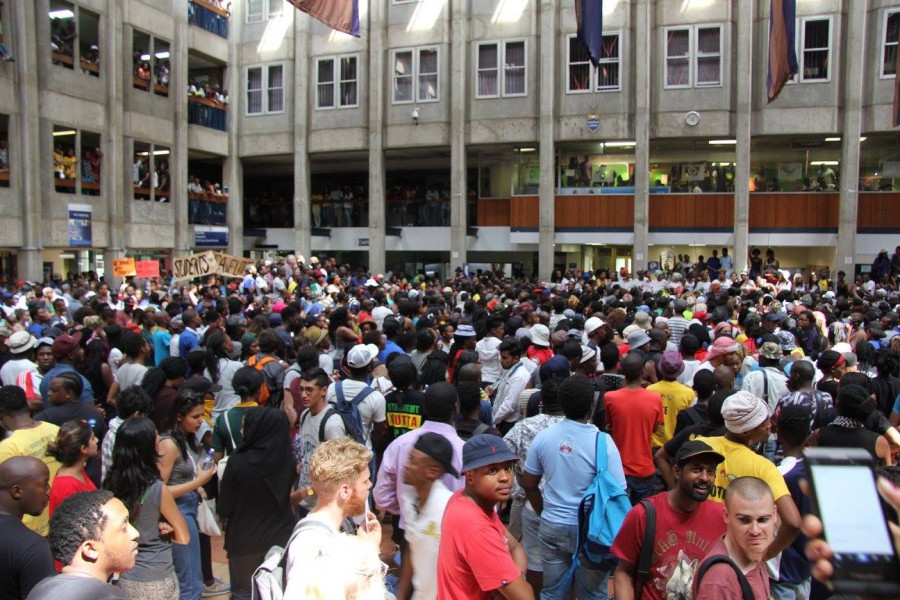
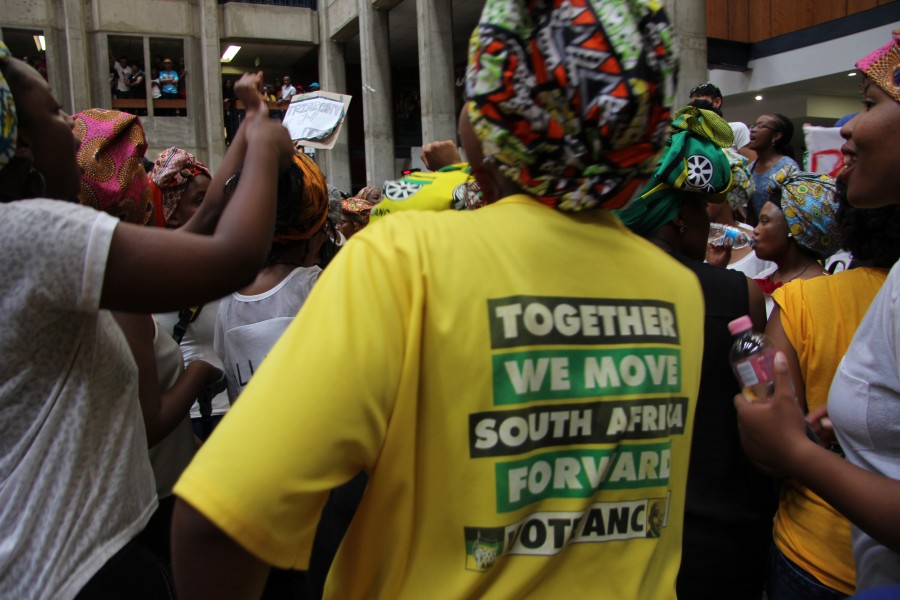
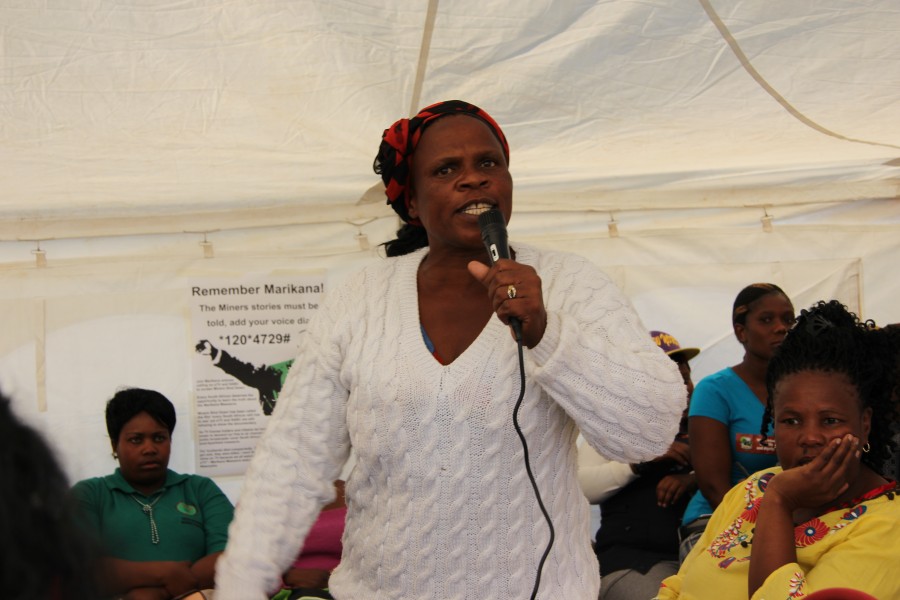
I am an ardent supporter of ‘profane tongue’ as a protest performance tool when used to challenge and interrupt the violence inherent in the dominant discourse. I am also a supporter of the shit wars and regard the unfolding of the port-a-potty protests as the most potent disruption of elitist hegemony in a post 94 South Africa – followed by the Rhodes must Fall campaign.
At a time in our history where the collective is brutally suppressed and black anger is presented on mainstream media as the ultimate violence, the marginalised masses find new and inventive ways to make their grievances heard. If this means spewing the human waste that they are forced to live in, into the sanitised public spaces of the well heeled, then we should applaud their bravery and inventiveness. In a neo-colonial world order where democracy and human rights for the rich means “shoot to kill” for the poor, it stands to reason that protest becomes a desperate cry for the recognition of the collective and individual humanity of the disenfranchised.
Like it or not, defecation is the most visceral and inevitable aspect of being human no matter what your class, race or gender. By importing the unfettered faeces of the poor collective, who live with dismally inadequate sanitation, into the deodorised spaces of those who are able to flush their own faeces away in actual toilets, they are successfully exposing the extreme and dehumanising cruelty of a Capitalist system that privileges some and entirely de-privileges others.
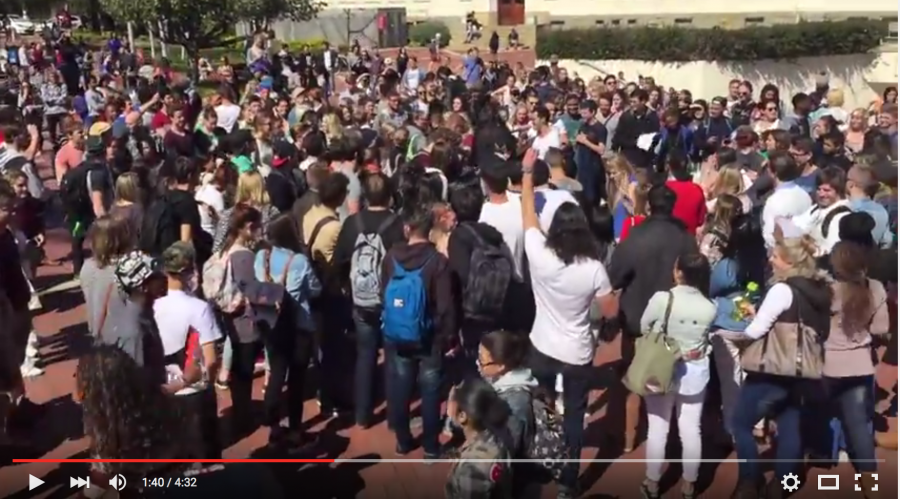
By the same token using so-called ‘dirty language’ to express frustration at enduring white hegemony or at political elitism is an equally valid form of insurrection, as is stencilling profanities onto monoliths of race-based power rooted in a protracted history of colonialism and representative of entrenched white male privilege – such as Jameson Hall at UCT.
Of course the common sense response from the privileged class to the use of the profane in protest is usually shock and outrage. They decry the animalistic behaviour of the filthy bodied, filthy mouthed, uneducated poor. They criminalise their desperation. They cover their noses, eyes and ears and demand that ‘these people’ are taken in hand and disciplined, incarcerated and even massacred if needs be. They consent to the militarisation of the police force to keep the ‘unclean’ out of their pristine spaces.
Sometimes they use elitist theory to delegitimise the intellectual premise for black protest in supercilious articles brimming with white supremacy masquerading as academic thought.
Or they just shut off the mic.
Theirs is an infantile semantic reaction. They decide how things ought to be and transpose their own set of meaning and values onto the poo protests, onto Rhodes must Fall and onto the defacement of Jameson Hall. Instead of engaging the semiotics of this protest action from the subaltern perspective they insist that this is just bad behaviour. They develop top-down arguments to criminalise black struggle and to silence black Rage.
Italian theoretician, Antonio Gramsci, argued that Capitalism maintains its control not only through state violence but also through a hegemonic culture, which propagates its own values and norms into a ‘common sense value system’ that is imposed on all. Its managers are enacted through lobbying and political funding into the realms of political influence, the mainstream media, the judiciary and the academy. Through this well-oiled network they work together to maintain the status quo.
The chattering class’s superficial discourse is influenced by this ahistorical, depoliticized dominant discourse and is, for the most part, lacking in underlying wisdom. Its logic is built on debating skills, personality cults, common sense fallacies and individualistic narratives constructed to push the illusion of a bourgeois social superpower.
It is through social and mainstream media chatter that the middle classes amplify their outrage and become the self-appointed arbiters of norms and standards as they move towards being the new dictators. Whilst paying lip service to progressive values they demand from the system, often in silent complicity, that more fascist methods are used against the poor collective when it challenges their sense of decorum.
State, as it becomes increasingly corporatised and oligarchical, readily obliges. They rely on this middle class consent to keep the masses down – ensuring that the collective is broken, abused, and fractured to avert real possibility of mass revolt.
Civil Rights activist, educator and author, Dr Cornel West, talks of this syndrome in the US context in his critique of President Obama. He calls it the co-opting of black individuals by neoliberalism. As West has written “We live in a time of ruthless ambition and individual upward mobility. This has largely obliterated the collective fightback and basically the black elite class have betrayed the black poor.”
The black elite class is what Left critics refer to as those neoliberal blacks who are useful to white hegemony, because they can easily pay lip service to the black cause in convincing language – but when it comes down to it, it is clear which master they serve. In South Africa this is also seen in black protectors of white hegemony – social and media gatekeepers who perform as if they are critical of systemic issues, but scratch the surface and it is nothing more than self-serving empty rhetoric that is ‘well adjusted’ to the status quo.
It is they who snatch the mics off expressions of black anger when their masters become uncomfortable.
In an entrenched hyper-capitalist system such as South Africa, the dominant discourse enduringly emanates from white monopoly capital bolstered by the black elite who benefit form it. It remains a “Master Narrative’ based on bourgeois norms and values. This narrative is often at loggerheads with the wider black narrative – especially when the black elite chooses to rebel against this white cultural hegemony, as happened around “The Spear” debacle. But for the most part the state is complicit in the white cultural and economic hegemonic in this country.
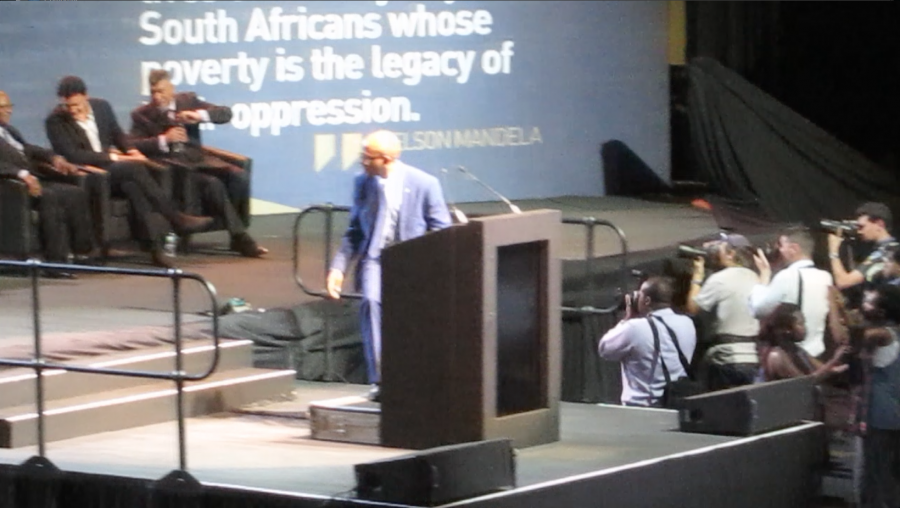
It is no wonder then that a young black audience member would shout out “Fuck whites” at the Ruth First Memorial Lecture – in utter frustration at the constant pushing of systemic whiteness in public spaces as well as the co-option of radical spaces by an increasingly corporatized liberal academic echelon. It is also no wonder that in an epoch where rampant individualism has taken the place of the collective, as observed by West, that a black liberal celebrity compere would take it upon himself to cut off the mic held by the frustrated interjector.
Switching off the microphone that amplified black anger, metaphorically and literally, is just what is expected of them. They are willing to be the mascots of what West calls the ‘superficial spectacle and hyper-visible celebrity born out of the culture of raw ambition and instant success. They are co-opted and incorporated into the neoliberal regime’ and are used to legitimate the ‘colourblind’ capitalist agenda.
But when they are exposed for doing the master’s bidding and reveal themselves to be complicit in the liberalist anti-black agenda, they quick-talk their way out of it using debate tricks and duplicitous discourse inherent in the Nature of neoliberalism. They play host to a non-existent radicalised consciousness and claim that white supremacy is high on their agenda.
Yet you will be hard pressed to find a radical critique of Capitalism and its reliance on the violence of white hegemony in their body of work.
As Angela Davis has warned: “Since the rise of global capitalism and related ideologies associated with neoliberalism, it has become especially important to identify the dangers of individualism. Progressive struggles—whether they are focused on racism, repression, poverty or other issues—are doomed to fail if they do not also attempt to develop a consciousness of the insidious promotion of capitalist individualism.”
The act of switching off the microphone of a Black person expressing his anger and pain which is rooted in a brutal colonial history, is the violence of whitist complicit bourgeois hegemony. It is racism by proxy. It decides on what the rules of engagement will be. It decides on the parameters of “freedom of expression”. It decides on what is acceptable or moral behaviour. It trivialises Black protest voice as fraudulent or labels it as violent.
If it is called out it will easily use the progressive struggle language available in its arsenal, to deny this conservatism and appease a black constituency.
The new liberalist trend is to push the dominant discourse and then attack dissenters with self-serving platitudes about their own ‘progressive’ agenda whilst dictating the terms and policing black rage.
You can’t push whitist cultural hegemony and then claim, in debate savvy doublespeak, that you are doing the opposite.
Oh wait – apparently you can in this slippery neoliberal epoch which relies on forked tongue discourse to maintain the status quo.
Who but the chattering class is buying it?
If you use the master’s tools to manage ‘Black rage’ or shut down counter-hegemonic language then you are working for the master – no matter how much you bleat the opposite.
An edited version of this was published in Sunday Independent 30/08/2015
By Gillian Schutte
To be born white in South Africa is akin to being born with a trust fund left to the white collective courtesy of our ancestors.
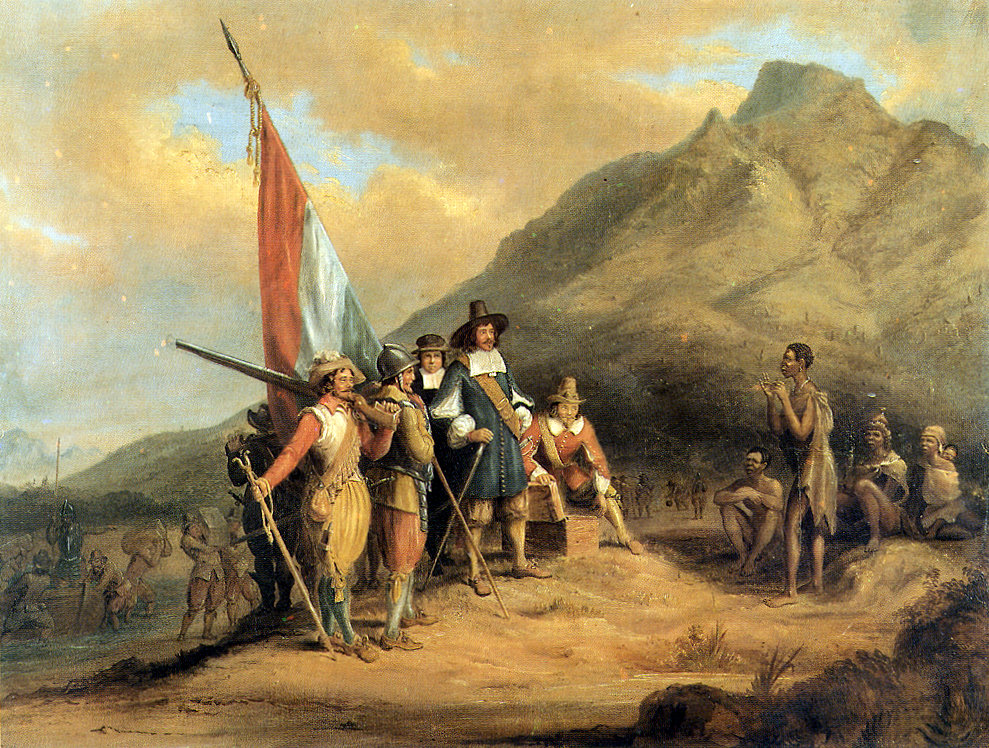
White people can be guaranteed, even before they are conceived, that they will be born into a 500-year-old (colonial history) white-friendly, socioeconomic system created to advantage them.
When a white person is born they are automatically endowed with a set of benefits, securities and givens that not all black people can guarantee.
Of course there are wealthy black people and a black elite – but we are talking about white privilege in South Africa – and all whites benefited from colonialism and apartheid in one way or another.
Most white people continue to benefit from elitism and neoliberalism.
Most white people are reluctant to shift this status quo and lose their special privileges.
Enduring white resistance to transformation and the dearth of moves towards genuine equality says it all.
This is why 21 years into an independent African democracy around 70% of the top management positions are still held by white males, even though white males often complain the loudest about being pushed out of the economy under black rule.
White people are afraid of losing this set of privileges and thus create a lexicon of nonsensical terms such as ‘reverse racism’ and plentiful negative anti-blackness notions that continue to label black people as incompetent and less worthy.
This says more about white hegemony than it does about black potential or black excellence.
To point out the hegemonic nature of whiteness or write about white privilege does not mean that all white people are ‘black-hating monsters’ or that you want white folk to feel immense guilt.
What you want is for white people to notice how this hegemony thwarts transformation and equality and thus robs our future generations of a world that is equal, celebrates diversity and commonality and is pro-humanity not pro-white.
To point out majority black poverty and the enduring nature of systemic and institutional racism does not mean that you think all black people are victims, have no potential or are not fully fledged and successful vibrant people.
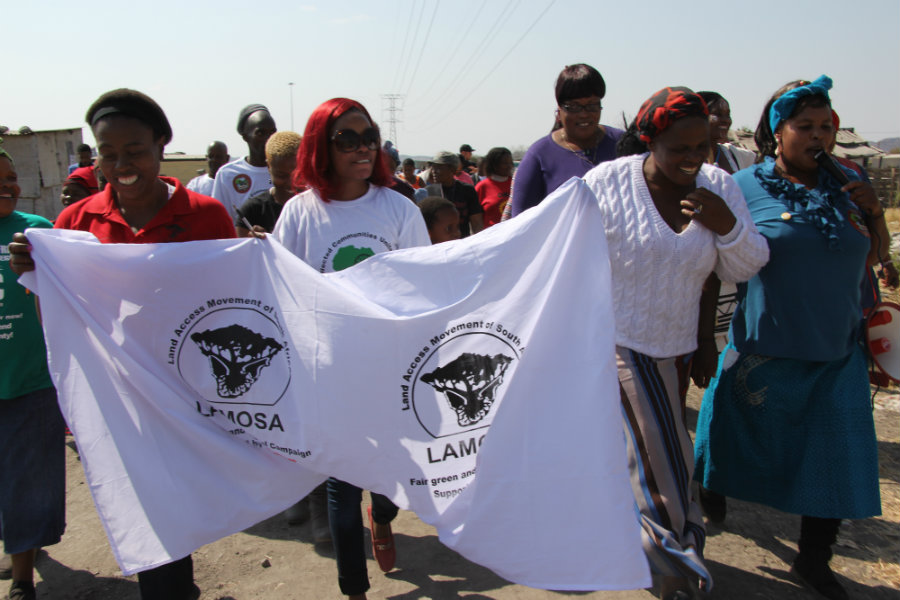
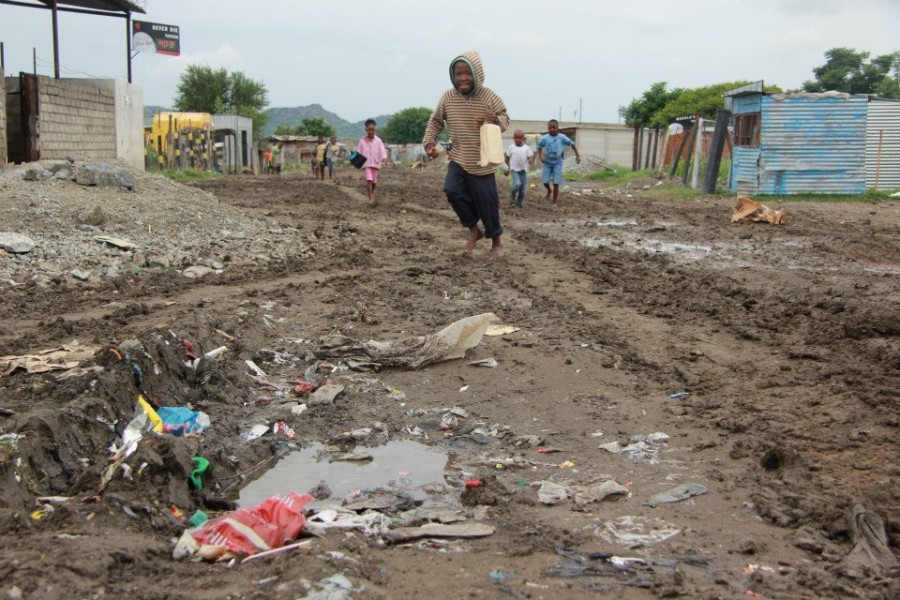
To write about this race and inequality means to write about what is wrong and what needs to transformed in our society – especially in a country with a Gini Coefficient of 0.77 and around 53% of our population living in extreme poverty. That means around 27 million (majority black) citizens are critically poor as a direct result of a white colonial history of oppression and continued blacksploitation.
Yes we know not all whites are rich and spoiled and that those white folk born into wealth and economic privilege have it all the more easier than those of us not born into ‘old’ or ‘new’ money – but this does not cancel out the systemic privileges afforded to the whiteness club.
These benefits, securities and givens are not only economic, because, again, we know that not all whites are actual ‘trust fund babies’ – but whiteness still bestows numerous privileges onto those born into it that are often at the expense of, or denied to, those not white.
This is not to suggest that the zygote or the new born baby is personally racist – but white racism is an inevitable fact for white skinned people, even those who perceive themselves to be not racist.
This is because white babies are not born into a race-neutral world. They are born into a world that has been systemically skewed by white colonial history to benefit whites and disadvantage people that are born ‘not white.’
Contemporary neocolonialism and neoliberalism has further entrenched white privilege – to the point that even Marxists would have to agree that in countries with a settler history, racism is the primary premise of white economic and social privilege.
Surely without the historical exploitation of the black collective body and the subjugation of indigenous people in colonies, white economic supremacy would not be entrenched.
The curse of white skin for race abolitionists is that no matter how non-racist or anti-racist they purport to be they cannot escape the systemic condition of whiteness.
Bringing it down to the basics
If compared to middle class black society…
They will be more likely to deny that all of the above is the truth about white privilege. In fact they will more than likely deny that there is such a thing as white privilege and hegemony and label those who shed light on this topic as a race traitor.
But no amount of denialism or aggressiveness to those who write about white privilege and its negative impact on fellow humans is ever going to change the fact that white people deny and threaten those who shake up their comfort zone or question the status quo precisely because they do not want to give up on their privileges and are more than willing to perpetuate the conditions that allow them to continue living with a set of givens, norms and benefits denied to other people.
(A shorter version of this piece was published in Sunday Independent on 02/02/2015)