Whiteness is an Ancestral Trust Fund.

By Gillian Schutte

To be born white in South Africa is akin to being born with a trust fund left to the white collective courtesy of our ancestors.

White people can be guaranteed, even before they are conceived, that they will be born into a 500-year-old (colonial history) white-friendly, socioeconomic system created to advantage them.

When a white person is born they are automatically endowed with a set of benefits, securities and givens that not all black people can guarantee.

Of course there are wealthy black people and a black elite – but we are talking about white privilege in South Africa – and all whites benefited from colonialism and apartheid in one way or another.

Most white people continue to benefit from elitism and neoliberalism.

Most white people are reluctant to shift this status quo and lose their special privileges.

Enduring white resistance to transformation and the dearth of moves towards genuine equality says it all.

This is why 21 years into an independent African democracy around 70% of the top management positions are still held by white males, even though white males often complain the loudest about being pushed out of the economy under black rule.

White people are afraid of losing this set of privileges and thus create a lexicon of nonsensical terms such as ‘reverse racism’ and plentiful negative anti-blackness notions that continue to label black people as incompetent and less worthy.

This says more about white hegemony than it does about black potential or black excellence.

To point out the hegemonic nature of whiteness or write about white privilege does not mean that all white people are ‘black-hating monsters’ or that you want white folk to feel immense guilt.

What you want is for white people to notice how this hegemony thwarts transformation and equality and thus robs our future generations of a world that is equal, celebrates diversity and commonality and is pro-humanity not pro-white.

To point out majority black poverty and the enduring nature of systemic and institutional racism does not mean that you think all black people are victims, have no potential or are not fully fledged and successful vibrant people.

To write about this race and inequality means to write about what is wrong and what needs to transformed in our society – especially in a country with a Gini Coefficient of 0.77 and around 53% of our population living in extreme poverty. That means around 27 million (majority black) citizens are critically poor as a direct result of a white colonial history of oppression and continued blacksploitation.

Yes we know not all whites are rich and spoiled and that those white folk born into wealth and economic privilege have it all the more easier than those of us not born into ‘old’ or ‘new’ money – but this does not cancel out the systemic privileges afforded to the whiteness club.

These benefits, securities and givens are not only economic, because, again, we know that not all whites are actual ‘trust fund babies’ – but whiteness still bestows numerous privileges onto those born into it that are often at the expense of, or denied to, those not white.

This is not to suggest that the zygote or the new born baby is personally racist – but white racism is an inevitable fact for white skinned people, even those who perceive themselves to be not racist.

This is because white babies are not born into a race-neutral world. They are born into a world that has been systemically skewed by white colonial history to benefit whites and disadvantage people that are born ‘not white.’

Contemporary neocolonialism and neoliberalism has further entrenched white privilege – to the point that even Marxists would have to agree that in countries with a settler history, racism is the primary premise of white economic and social privilege.

Surely without the historical exploitation of the black collective body and the subjugation of indigenous people in colonies, white economic supremacy would not be entrenched.

The curse of white skin for race abolitionists is that no matter how non-racist or anti-racist they purport to be they cannot escape the systemic condition of whiteness.

Bringing it down to the basics

  • Besides that small percentage of whites that have slipped through the systemic cracks and are also critically poor, on average white new-borns can mostly be sure of the following:
  • They will not be born critically poor.
  • They will more than likely have access to nutrition, nappies, and a healthy mother.
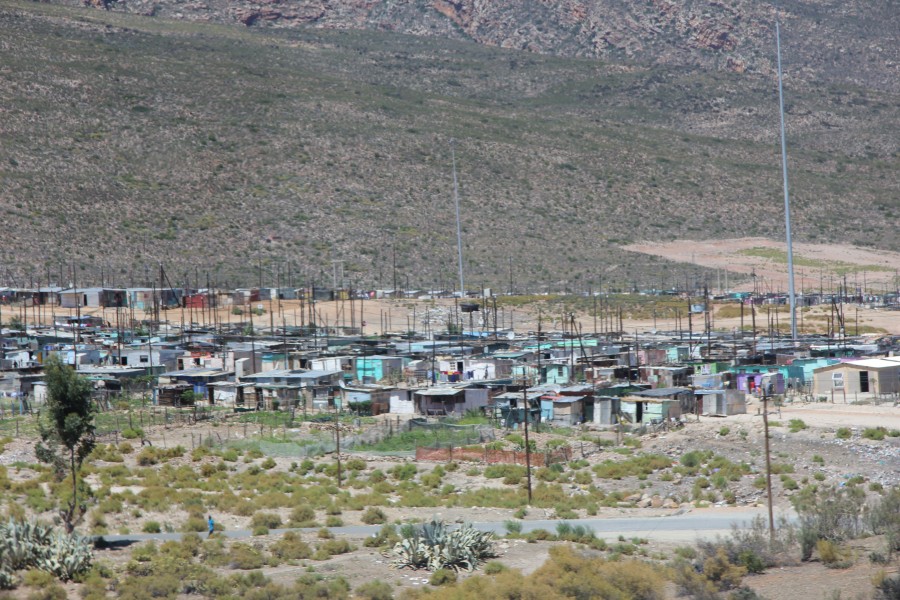
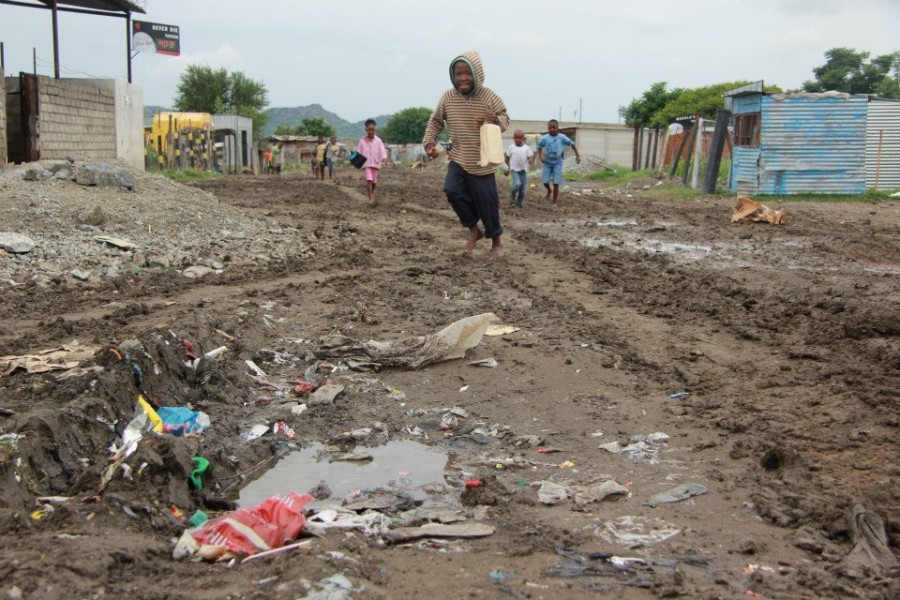
  • They more than likely will never have to watch their mother, father, grandparents or siblings suffer the indignity of the bucket system or porta-potties and then experience the added indignity of having to find somewhere to dispose of their waste.
  • They will never see their mothers or relatives walking over 200 meters to a tap, or 2km’s to a river, to collect water for daily washing, cooking and family hygiene.
  • They will most likely have access to electricity, warmth, hot water, bathtubs, flushing loos and toilet paper.
  • They will more than likely have access to decent housing, education, service delivery and justice.
  • They will have access to an education system with highly qualified teachers, libraries and decent facilities.
  • They will not have parents who can be shot at with live ammunition and tear gassed or arrested for joining a protest around service delivery or better wages.
  • They will be less likely to know personally, or have a family member or friend who has been incarcerated, either for political or criminal reasons.
  • A white new-born’s parents are less likely to suffer the same types of stresses that the majority of black parents suffer from because the majority of white parents have more access to economic opportunities.
  • They live in areas that are closer to work opportunities.
  • Their neighborhoods are built around social spaces, such as parks, community halls, shopping spaces, libraries, schools, restaurants and cinemas.
  • They are more than likely able to afford to use these amenities.
  • Their homes will more than likely have adequate furnishings and domestic resources.
  • They will not have to spend 30% of their meagre earnings on transport and travel long distances to get to menial low paying jobs.
  • If they become struggling single mothers they will still, on average, earn a much higher salary than struggling, uneducated single black women.
  • They will be less likely to be victims of HIV or AIDS, TB, Malnutrition and related illnesses.
  • They will have access to health services and they will more than likely live a longer lifespan.
  • They will not have the burden of the history of systemic oppression to work through.

If compared to middle class black society…

  • White middle class youth will be less likely than black middle class youth to have to financially support family and relatives when they begin to earn money.
  • They will be less likely to have huge economic cleavages between them and members of their extended family if they make it up the economic ladder.
  • They will have less guilt about how they spend money on themselves whilst part of their family still uses the bucket system or has no access to proper nutrition.
  • They will probably not have a husband, brother, mother or neighbour who can testify to having been suspected of stealing, loitering, planning a heist or spoken to like a child by a white shop owner.
  • They will not consistently have to prove themselves by working doubly hard to underscore their intelligence in a white dominated corporate world.
  • They will not be accused of wanting to be ‘white’ for joining the economy and climbing up the economic ladder.
  • They will not be mocked for driving a smart car as if they bought the car at the expense of their children’s education.
  • They will not be forced to adhere to a skewed system that belittles them to gain acceptance in an economy historically built on the backs of their own people’s oppression.
  • They will not have to prove that they are not ‘whining victims’ when they complain or protest against delegitimizing white racist discourse – whether overt or covert.
  • They will also be assured that their views would be the default position and everyone around them would have to work hard to prove their counter views.
  • They will be assured of positive representations of their own likeness in advertising, films and news stories.
  • They will have the security of knowing that if you are white, male and rich could possibly get away with murder because the justice system is more geared towards white males than women or black people.
  • They will never be accused of reverse racism as a way to silence their dissent against unfair privileges bestowed onto people because of their skin colour in a world skewed to advantage some at the expense of the other.
  • They will, on a conscious and subconscious level, be given the message over and over that white humanity is more valuable than black humanity.
  • They will be less likely to be brutalized by the state and state mechanisms.
  • They will never experience racism.

They will be more likely to deny that all of the above is the truth about white privilege. In fact they will more than likely deny that there is such a thing as white privilege and hegemony and label those who shed light on this topic as a race traitor.

But no amount of denialism or aggressiveness to those who write about white privilege and its negative impact on fellow humans is ever going to change the fact that white people deny and threaten those who shake up their comfort zone or question the status quo precisely because they do not want to give up on their privileges and are more than willing to perpetuate the conditions that allow them to continue living with a set of givens, norms and benefits denied to other people.

(A shorter version of this piece was published in Sunday Independent on 02/02/2015)


Rachel Dolezal and the unbearable burden of whiteness.


By Gillian Schutte

When Rachel Dolezal’s story exploded onto the social media two weeks ago it started off as a curious narrative of a white woman who had appropriated a black identity and had used this identity to work her way into leadership positions in Black Rights organisations. Speculations abounded as to what her motivations were. Was she over-identified with black struggles and thus the natural progression was for her to become black? Was this an expedience that allowed a privileged white woman to ‘wear’ blackness so that she could procure those positions created for black leaders? Was this a noble act of martyrdom where she gave up on her white privileges to push the Black cause? Or was this a blatant display of racism and whitism at its best?

While the world speculated and debated Dolezal’s eccentric physical transformation and as the story behind her choice to become black unravelled in the media, it soon became clear that it is perhaps never possible to simply appropriate a raced identity that is rooted in a history that is not your personal embodied experience.

Dolezal, in the end, was unable to pull off an authentic framework or premise for being black. Instead she wove a complex web of essentialist whitist fantasies about growing up black and partly indigenous. Her narrative brimmed with imagery of tepees, bows and arrows, Africa, abusive parents, and lots of black siblings who were punished by a cruel white stepfather with a ‘baboon whip’ in varying levels of brutality according to their hue. The darker your skin the more cruel the punishment.

The narrative Dolezal put together was just too top heavy with over strenuous stereotypes – and like Dr Seus’s Cat is the Hat, she was balancing precariously on a ball of artifice, juggling a multitude of half truths mixed with blatant lies. In the end she was trying to balance a sculptural bricolage of borrowed facts and falsities whilst fast-talking her way out of this disingenuous maze she had built around herself. Such a deceptive artefact was always in danger of crashing down around her ears.

According to reports her adoptive brother Ezra said that in the week following her outing she told so many different versions of the same lie that for him it was not a matter of identity but more a matter of integrity.

Dr Lynn Gehl, an indigenous activist, educator and blogger who is descended from the Algonquin Anishinaabe-kwe people in Canada, wrote in an article on her blog site Black Face Blogging; “When I think about Rachel Dolezal … I have come to know that when someone claims to be Black or Indigenous when they are not, they need to be informed that because their parents, and their ancestors, and they have not lived, and as such embodied the intergenerational knowledge of being Black or Indigenous, they are not Black or Indigenous.”

In this framework it is ontologically impossible for a white person to even begin to be black because they simply do not have the imprints of individual or collective black experience in their consciousness or their sub consciousness. Any white person, who carries within them the deep cellular memory of white collective and individual experience, is going to trip herself up. Dolezal’s black identity could be nothing more than a hollow persona and even if she did fool some – others had already begun to identify her actions as confusing and dangerous to the black cause. The ‘aha’ moment happened when she was outed as white.

In the end no matter how much a white person experiences empathy with black struggles or wants to become Black, or resonates culturally with blackness – we cannot simply become something other than what we are. Firstly our culturally specific childhood indoctrination has a way of filtering through to our unconscious and becomes part of our automatic response to Blackness – along with our inherited universally specific racist archetypes (over 500 years of racist memory). This concoction of acquired and inherent conditioning holds individual and collective whiteness in its inevitable grip and even if one goes through a process of deconstructing and unlearning the precepts about race, this conscious and unconscious racism cannot simply be unlearned through a quick fix process or by wearing black.

What Rachel Dolzal did instead of owning her whiteness and working from the point of deconstructing the limitations this forces onto one’s humanity and the humanity of all people, was to try and obliterate her by now ‘inconvenient’ whiteness by wearing a black mask – a process that created cognitive dissonance for many in a world in which it is more often Black people becoming white to survive in a world that privileges whiteness.

Some came out in her favour, translating her position as an act of kindness and casting her in the whitist trope of the ‘noble white woman turned noble savage.’ But many more were furious at her appropriation of an identity that was not hers to take.

What Dolezal attempted to do was an impossible feat to begin with and Dolezal lacked the required psychological maturity to recognise her performance of Blackness as a lie.

Her case got me thinking about my own space as a white race justice activist who writes publically about issues of whiteness, racism and social justice – a concoction that incenses conservative and liberal whites alike. The issue of appropriating Black struggles is always in question when writing about whiteness because by so doing you cannot avoid writing about Blackness too. The two race categories are indivisible. They are almost pathologically rooted in each other in a constructed dance of history, power and disempowerment. This is premised on the historical construct of whiteness created by our white forefathers who sought to oppress indigenous people in colonies to turn them into large and free reserves of slavery with which to build the white empires.

This supremacist and profit driven necessity to define white as the godly race put on earth to laud it over people of colour has created the definition of all other races and so it follows that racism resides only on whiteness and it is whiteness that must be obliterated as the central monolithic signifier to this binary condition. Once this construct is gone humanity can redefine sameness and diversity on egalitarian terms.

But for all this history and race theory black and white people are able to meet and share beyond these boundaries – live together, make love, have babies and share struggles in solidarity on their own terms. What they are not able to do is assume each other’s historical experience.

I carry the embodiment of my European history in my cellular DNA – in my mitochondrial reminiscence. My deep genetic memories are not rooted in Black experience. When I slip into the deep subconscious which becomes experiential via streams of consciousness, dreams and imagery, I hook right back to pagan animism, to Celtic and Nordic roots, to my mitochondrial line – some of whom were burnt at the stake in the European misogynistic war against its own women. All of this is there in my cellular memory which stretches back to a Pre-Church, Pre-Capitalism era – to a time when we were all human and not raced by a profit driven system upheld by heteropatriarchy and monotheism.

This does not make me less able to be a race justice activist or race abolitionist as I seek to break down the false  binaries that aim to de-humanise fellow humans, nor does it mean I cannot celebrate diversity. On the contrary, it allows me to appreciate my own indigenous knowledge and spirituality without having to vociferously appropriate this from people oppressed by white colonial history and perform another version of colonialism.

Rachel Dolezal was an activist. She did the work. But in the end then no matter how much she learned Blackness or fought for Black struggles her whiteliness showed in her willingness to appropriate an identity that was not hers to take.

Her performance has prompted many questions – which she seemingly, has no intention of answering.

Did she not trust that Black women were as capable of running the show as she was? Did she do this to circumvent the real difficulty of being a white race justice activist and labeled a race traitor – an uncomfortable position that often sees white society strip white folk of their ‘white privileges’ and results in ongoing death threats, and multiple abuses from both right wing and bourgeois liberals alike.

She only has to answer to the people whose identity she appropriated, and she has the task to dig her own way out of a pile of lies that just got too fandangled to sustain themselves. She has to live with the horrible thought that all her good work is most probably now discredited in many people’s minds and she will never hold that same respectable space again. She would have to be psychopathic to not be affected by that burden.
Sadly, if she had just remained white none of this would have occurred. She would have had to work in solidarity with Black struggles – not take them over. Perhaps this is what was more unbearable to her than living a lie.

White privilege is just not used to taking a back seat – ever.

Photo by: Robbin Atwell

Absolute Freedom vs Bigotry.


Article By: Sabelo Kotswana

Photo By:  Dennis Bratland

Freedom is the right or entitlement to say, do or think as one wants. It also entails a state of being free from bondage, enslavement or even being free from a despotic government. It can also mean latitude, leeway, scope, etc. The overriding factor with freedom is that it is obtained against authority. Authority be it government, employer, parents, etc. cannot simply deny you this entitlement without reason.

Legitimate reasons where this can be curtailed or even denied is when it is used to abuse another of a similar state or as a device to deny others similar rights.

One of the more popular rights is the Freedom of Expression which is often twinned with the freedom of speech. Freedom of expression entitles the one to express themselves as they wish in whatever medium they so choose. However, with any freedom comes responsibility. Shouting fire in a crowded theatre may indeed be freedom of speech, but it lacks the responsible awareness that such an utterance could create havoc and may lead to injury and even death of those who took that expression seriously.

Some governments around the world have put in place legal measures to deal with “excesses” of this freedom including libel and blasphemy laws, laws against hate speech, etc. These are put in place not to protect government, but fellow civilians who may feel aggrieved by an article or public comments. However being aggrieved on its own is not enough. There has to be material harm experienced by the complaining party and the guilty party needs to have at least foreseen that such an expression has a potential to cause such material harm.

There is, of cause, great debate between libertarians, conservatives, liberals and others regarding the extent of any freedoms. By their shear distrust of government, Libertarians would leave it all to the individuals to determine boundaries, if any. Liberals tend to agree somewhat with the Libertines, though they do not mind government intervention. Conservatives tend to prefer as little government as possible, but equally prefer to curtail most freedoms which leads to a contradictions. If you don’t want people to have control over their bodies or do as they please, you need big government to enforce such controls.

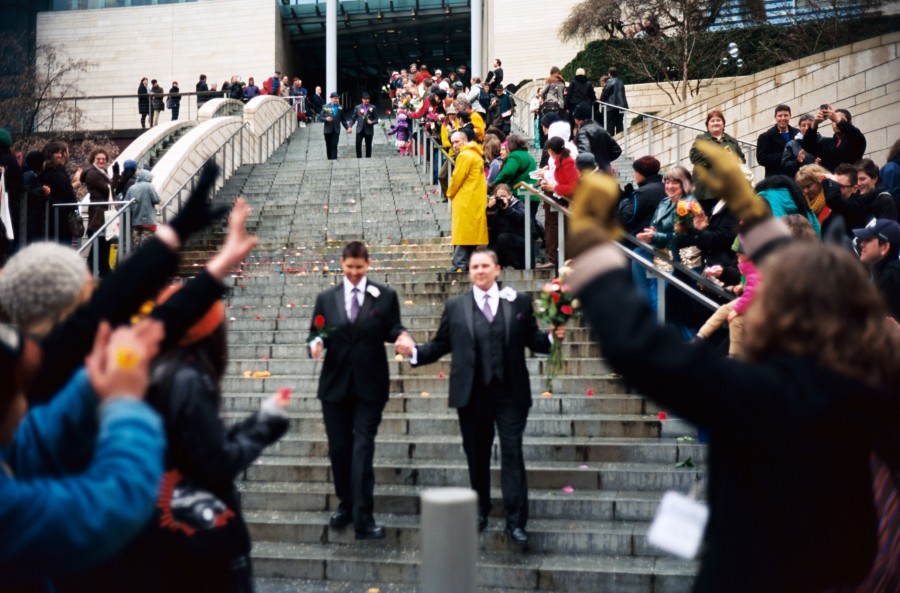
The real reason I was moved to write this is because of a debate I initially observed from a distance, but eventually decided to participate in. The UCT Acting SRC President (otherwise SRC Vice President) is quoted on Facebook denouncing the recent Supreme Court ruling in the US extending marriage to gay couples in 14 states that did not already have it. She said “We are institutionalising and normalising sin! Sin. May God have mercy on us.”

Obviously, there is a complication i.e. being in a senior position of the student representative council means Ms Zizipho Pae’s utterances or even writings will receive far more coverage than any other UCT student. And another complication is that her expression is derived from her religion. Freedom of Religion is one of the protected entitlements. A question that arises, if you remove her position as an SRC member, is whether such statements are harmful to another group. The reference to the recent ruling is the US is very clear. Sin is general seen an immoral act, crime, wrong, act of evil, wickedness, error or lapse. Sin is generally a religious term, rather than a constitutional one. It carries a lot of connotations as the synonyms will suggest.

Indeed, it is the basis in which countries in the past (including in Africa) criminalised homosexual relationships. In at least 3 African countries, homosexuality is a crime punishable by death. It is therefore clear that the consequences of calling someone a sinner (or what they are, a sin) is intended to dehumanise such an individual or group. It may have the undesired effect of encouraging vigilantism as seen with the Matthew Shepherd case in the US.

There is also the misconception that freedom of expression means my views cannot be challenged in the very platform or any other platform someone else chooses. One you express yourself, there is a chance that someone else will disagree and may criticise you. They may do it in the same forum or even a different forum. They may choose to mock you as comedians do or blast and even go beyond the scope of the expression to which they respond to. Such response can include taking an ad to highlight their disagreement, they can organise a march, they can go to twitter and voice their disagreement or they can go to the media.

While you are free to express yourself, everyone else is also free to disagree with you in whatever way they deem fit, within the law. In addition the religious angle in a country that is overwhelmingly religious and still harbour strands of homophobia is quite misunderstood. Freedom of religion does not mean you have a right to insult other people’s lack of belief. Indeed, freedom of religion extends to atheists as well. They have a right to their lack of religion. Imposing your religion, even if it is meant as a loving gesture can have a detrimental effect on others especially those who are actively atheist i.e. they are atheists because they considered options available to them and chose not to align with any formal religion.

It is admirable that Zizipho feels so strongly about her religion and I am glad that she is not prevented from exercising it, but her comments seem rather intolerant of those who have chosen a different path to hers. Those in support have asserted her freedom of religion is being impacted by her suspension, but they seem oblivious that freedoms have limitations i.e. when they cause harm to others.

Freedom of religion cannot be excused from this. Finally, in any democracy, people try to find their space and often this entails stepping on each other’s toes. It is important not to overreact or get rid of the experiment. We are new to this and we will eventually find an equilibrium. Cosmopolitan societies are such that there are different backgrounds and baggage and we need to exercise some tolerance provided it is not abused.